If you’ve got a limited company, one of the most common bits of advice you’ll hear is this:
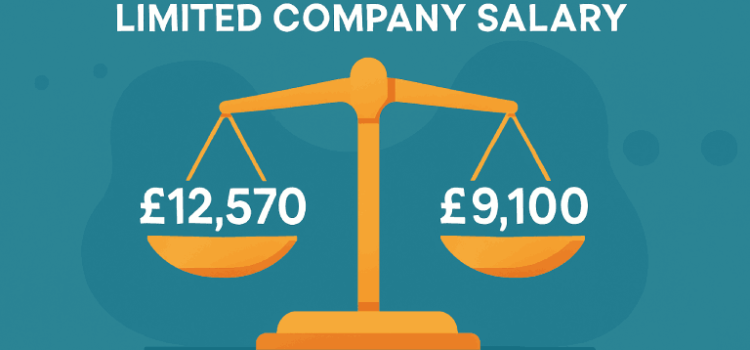
“Pay yourself a salary of £9,100 and take the rest as dividends.”
It’s been the default setup for years — and in some cases, it still makes sense.
But is it actually the most tax-efficient strategy in 2025/26? Not always.
In fact, for many small business owners with modest profits, it can now make more sense to pay yourself a full salary of £12,570 — even though you’ll pay a bit of employer National Insurance along the way.
Let’s walk through it properly.
The Two Options
Assume you’ve got £30,000 profit in your company before paying yourself anything.
Option A –
£9,100 Salary + Dividends
- No employer NIC
- Keeps some personal allowance spare for dividends
- Seen as the “safe default”
Option B –
£12,570 Salary + Dividends
- You’ll pay employer NIC on the salary above £9,100
- But you reduce Corporation Tax by more
- You use up your full personal allowance
Let’s crunch the numbers and see what’s actually better.
The Full Comparison
🔹 Scenario A: £9,100 Salary
- Employer NIC: £0
- Corporation Tax: 19% on £30,000 – £9,100 = £3,971
- Available dividends: £16,929
- Dividend tax: £1,134
- Total tax paid: £5,105
- Total to you:
- £9,100 salary
- £16,929 – £1,134 = £15,795
- Total net: £24,895
🔹 Scenario B: £12,570 Salary
- Employer NIC: £479
- Corporation Tax: 19% on £30,000 – £12,570 – £479 = £3,221
- Available dividends: £13,730
- Dividend tax: £1,158
- Total tax paid: £4,857
- Total to you:
- £12,570 salary
- £13,730 – £1,158 = £12,572
- Total net: £25,143
✅ Result:
By paying yourself a £12,570 salary, you end up £248 better off in this example.
Why It Works
It feels counterintuitive — you’re triggering employer NIC at 13.8%, which seems like a bad thing.
But that extra £3,470 salary between £9,100 and £12,570:
- Costs you: £479 in employer NIC
- Saves you: £659 in Corporation Tax (19%)
That’s a net gain — plus you’ve moved more money into your own name, rather than leaving it in the company.
So Why Do People Still Say £9,100?
It’s simpler. You avoid employer NIC entirely, you don’t need to report any NIC payments to HMRC, and it gives you more headroom in your personal allowance to use against dividends.
But if you’re:
- Paying yourself anyway
- Happy to run a basic payroll
- Looking to extract money tax-efficiently
Then £12,570 is usually the more efficient route at this profit level.
Other Things to Consider
- This only works if you’re not paying higher-rate tax. Once you go into the 33.75% dividend band, planning shifts again.
- The Employer’s Allowance doesn’t apply to single-director companies with no staff — so you can’t dodge the £479 NIC that way.
- It assumes you want to extract as much as possible — if you’re leaving money in the company, the conversation changes.
Final Thoughts
Tax is rarely one-size-fits-all. But if you’re the sole director of your limited company and you want to extract money as efficiently as possible — don’t assume £9,100 is the sweet spot.
In many cases, £12,570 is the better choice.
If you’re not sure what makes sense for your setup, or you want to sense-check how you’re paying yourself, I’m always happy to have a look.
No pressure. No jargon. Just honest advice from someone who does this every day.